Summer outdoor living in Greenville, SC starts with one question: what does your property make possible? For homeowners in the Upstate, this season is the ideal time to think about how your exterior spaces support the way you actually live — whether that means a quiet corner for morning coffee, a patio designed for gathering, or a shaded retreat from the midday heat.
The ideas below are drawn from the kinds of projects we take on most often at this time of year, tailored to the Upstate’s climate and the particular character of its residential landscapes.
Hardscaping: The Foundation of a Functional Outdoor Space
A well-designed outdoor space almost always begins with hardscaping — the stone, concrete, or brick elements that define where you walk, sit, and gather. In summer, this becomes especially clear. A properly graded and surfaced patio stays comfortable underfoot, drains well after afternoon storms, and holds its shape through the heat.
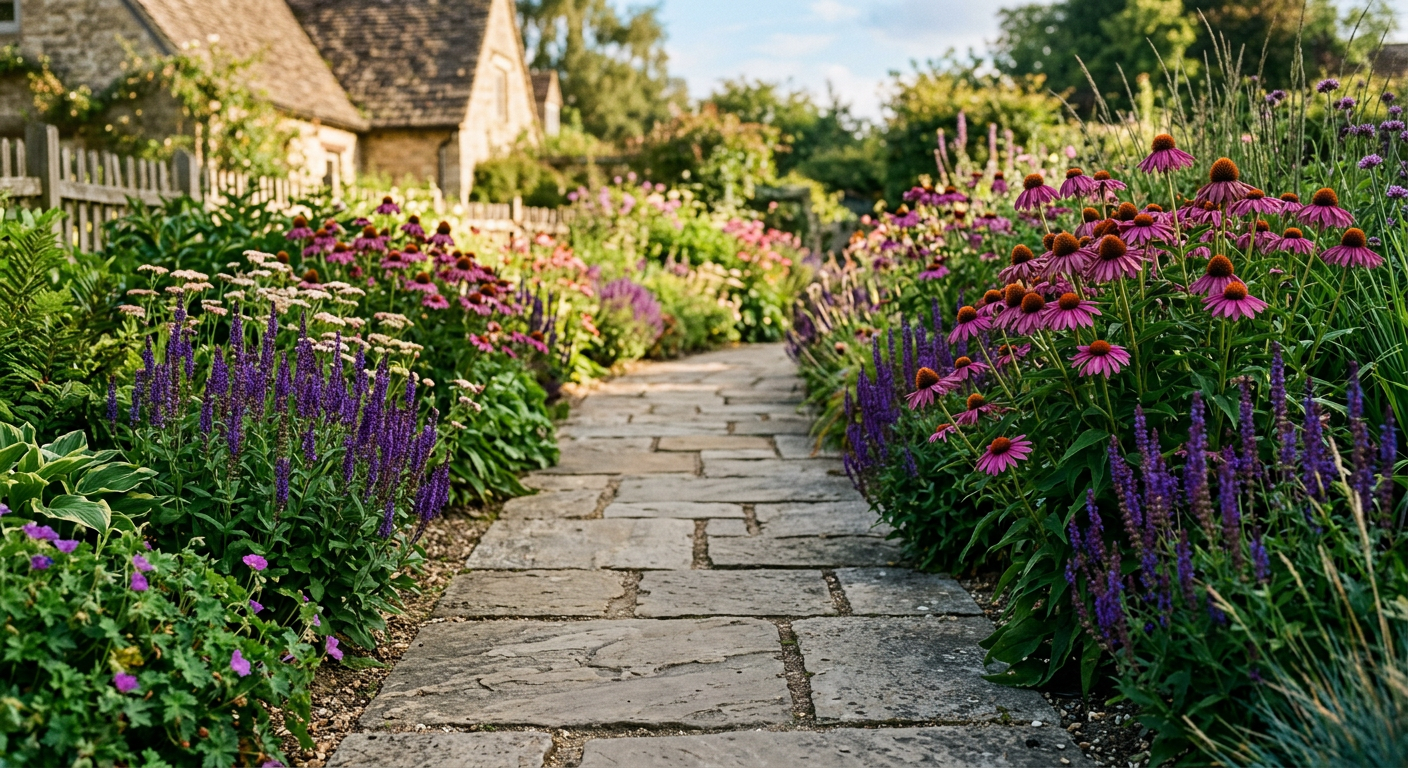
For Greenville homeowners, natural stone — bluestone, flagstone, or locally sourced fieldstone — tends to perform well in the Upstate’s humidity and temperature range. These materials retain less heat than dark pavers and age gracefully through seasonal cycles.
A few approaches worth considering this summer:
- Courtyard patios that create a defined gathering area adjacent to the home
- Hardscape paths that connect different areas of your property with intention
- Pool deck surfaces that balance durability, slip resistance, and visual continuity with the surrounding landscape
Each of these works best when designed for your specific site — accounting for grade, drainage, sun exposure, and how the space connects to the rest of your property.
Shade and Comfort: Pergolas and Outdoor Structures
Greenville summers run warm, and shade is not a luxury — it is a design requirement. A pergola or shade structure does more than block sun. When designed well, it creates a defined outdoor room that extends the livable area of your home.
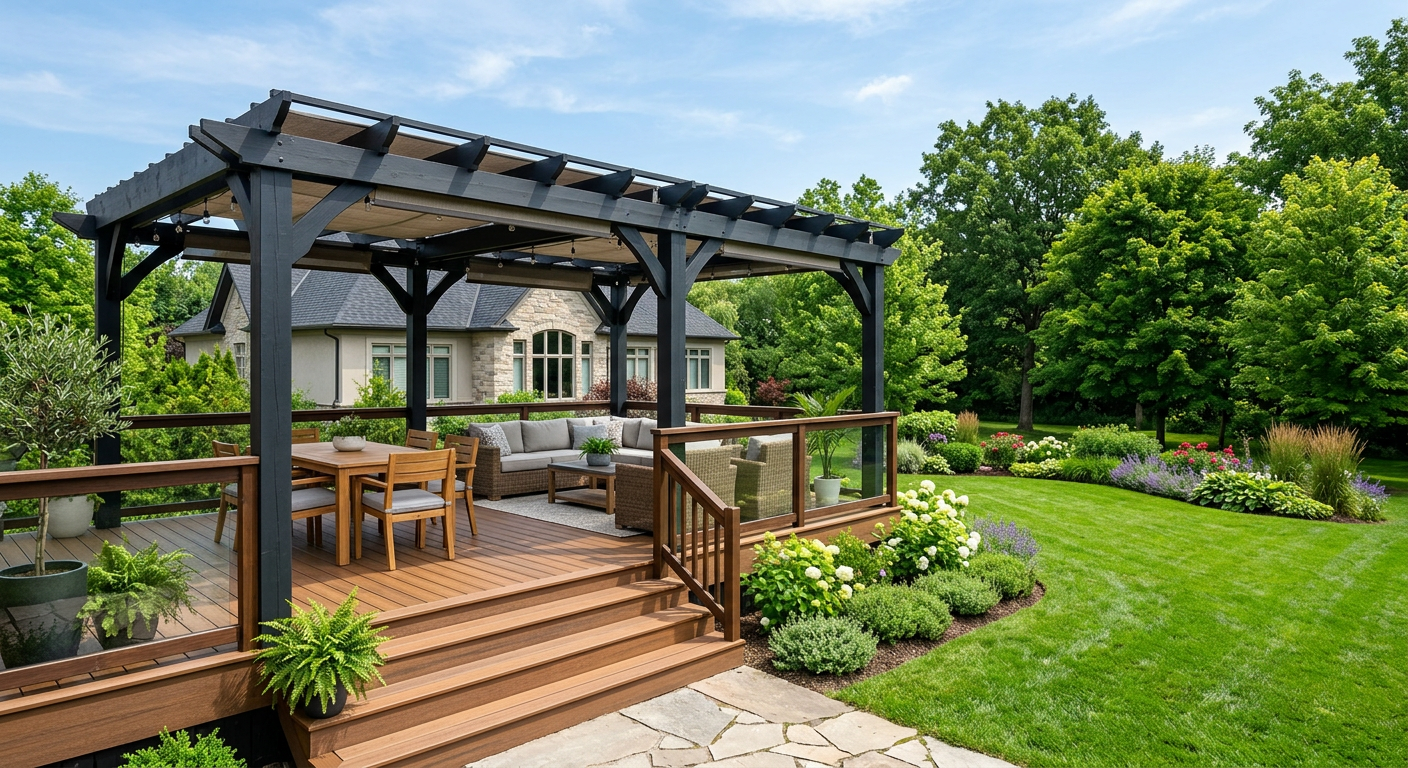
The most effective pergola designs we work with share a few traits:
- They are sized to the scale of the patio or deck beneath them
- They use materials that complement the home’s existing exterior
- They are oriented to provide shade during the hours when the space gets the most use
A shade structure also provides a natural anchor for outdoor lighting and ceiling fans — two additions that extend how late into the evening a space stays usable. During summer in the Upstate, that added hour or two after sunset is often the most pleasant time to be outside.
Water Features: A Practical Addition to Summer Landscapes
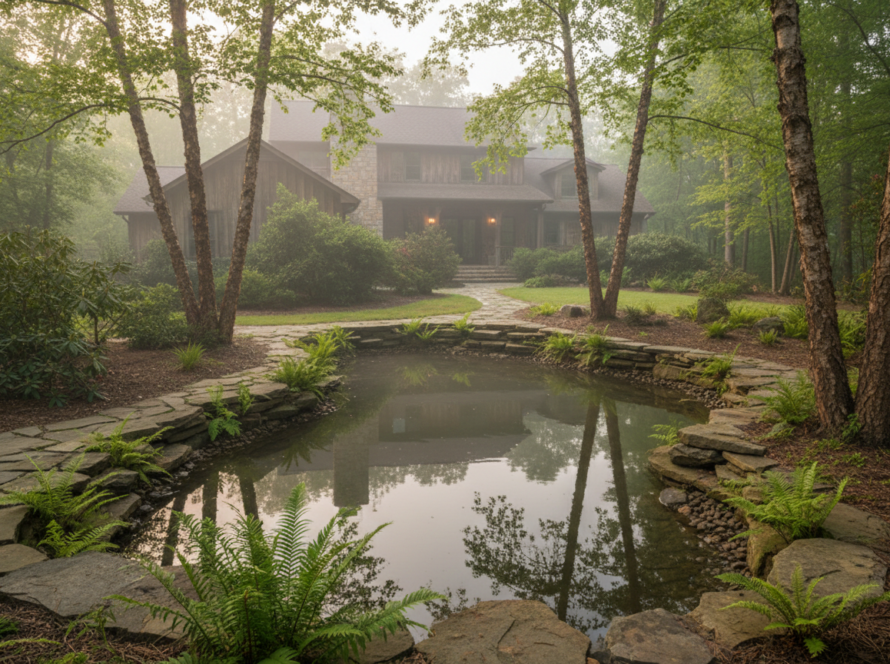
A water feature — whether a small pond, a recirculating stream, or a formal fountain — does more than add visual interest. In summer, the sound of moving water has a measurable cooling effect on the surrounding area and can soften traffic or neighborhood noise.
For residential properties in Greenville, we typically recommend water features that are:
- Scaled to the property (a feature that overwhelms a small courtyard defeats its purpose)
- Low-maintenance relative to their visual impact
- Integrated into the surrounding planting plan rather than placed as standalone elements
If you are curious about what a water feature might look like in your landscape, our backyard water feature project offers a concrete example of how this kind of installation comes together on an actual Upstate property.
Seasonal Planting: What Works in a Greenville Summer
Summer planting in the Upstate calls for plants that can handle heat, periodic drought, and the region’s clay-heavy soils without demanding constant attention. A few reliable performers for Greenville residential landscapes:
- Crape myrtles — Upstate staple, available in a range of heights and bloom colors
- Black-eyed Susans — heat-tolerant native, long bloom period through summer
- Ornamental grasses — low maintenance, adds movement and texture without regular watering
- Salvia — drought-tolerant, pollinator-friendly, works well along hardscape edges
The Clemson Cooperative Extension’s South Carolina plant selector is a useful reference for matching plants to your specific soil conditions and light exposure — particularly if you are planning a new planting bed or refreshing an existing one this summer.
Planning Now for Fall and Beyond
One pattern we see often: homeowners begin thinking about outdoor renovations in summer, when they are spending the most time outside and noticing what is not working. That timing is actually ideal for a different reason — fall is one of the best planting seasons in the Upstate, and many hardscape projects are easier to schedule and install when summer’s peak heat has passed.
Starting a conversation now means your project can be designed, permitted if needed, and ready to install at exactly the right time. Whether you are thinking about a new patio, a more functional lawn layout, or a full outdoor living renovation, a site-specific plan is always the starting point.
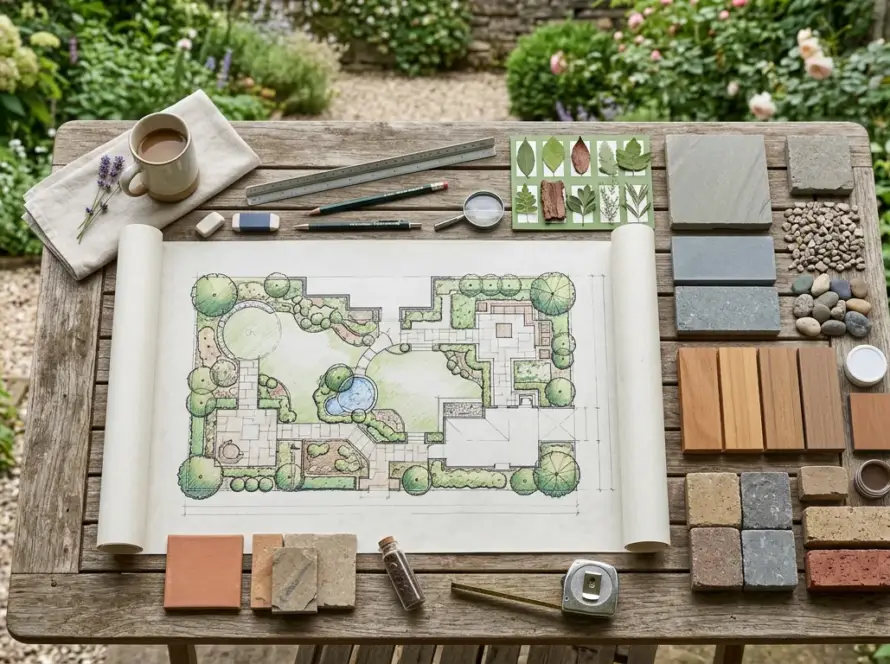
Our outdoor living renovation projects give a sense of the range of work we do, and our design and planning process explains how we approach each property from initial consultation through installation.
If you are ready to talk through what your Greenville property could support this summer or next season, contact us to schedule a consultation.
Frequently Asked Questions
What outdoor living projects are most popular in Greenville, SC during summer?
Patio installations, pergola additions, and water features are among the most common summer projects in the Upstate. Many homeowners also use summer to begin planning larger phased projects — landscape renovations that include both hardscaping and planting — for fall installation.
Do you serve homeowners in Simpsonville and Greer?
Yes. We work with homeowners throughout Greenville, SC and the surrounding Upstate area, including Simpsonville, Greer, Taylors, Mauldin, and Travelers Rest. Each project is designed for the specific conditions of your property.
When is the best time to start planning an outdoor renovation in Greenville?
Summer is an excellent time to begin the planning process, even if you are targeting a fall or spring installation. It allows time for site assessment, design, and material selection without rushing the project.